Susan and the Plumber

King parrot average lifespan

Susan and the knowledgeable Plumber

The air in Susan’s backyard was thick with the scent of eucalyptus and the high-pitched, electric scream of a chainsaw. She winced as a thick limb, heavy with grey-green leaves, crashed to the ground, sending a tremor through the earth. The man responsible, a grizzled figure named Barry, killed the saw and the sudden silence was almost deafening.

“Righto, Susan,” he said, his voice a dry rustle like the leaves beneath his boots. “That’s the worst of it. The old girl was a liability. One good southerly and she’d have been through your kitchen window.”

Susan nodded, looking at the remnants of the majestic gum tree. “It’s a shame, though. It was beautiful. The birds loved it.”

https://en.wikipedia.org/wiki/Plumber

Barry’s face, weathered and lined like a topographical map, split into a grin. “Oh, they’ll find a new perch, don’t you worry. The birdlife in this city is tougher than a boot full of spiders.” He pointed a thick, calloused finger towards the empty space where the canopy had been. “See that flash of red over there? That’s a male Scarlet Robin. A beauty. They’re not as common as they used to be. Prefer the open woodland, not so much the suburbs.”

Susan followed his gaze, spotting a tiny, fiery-breasted bird flitting between the branches of a neighbouring wattle. She’d seen it before, of course, but never really seen it.

Barry continued, his chatter as much a part of his work as his chainsaw. He’d already identified a family of New Holland Honeyeaters, and what he claimed was a restless flycatcher, calling it a “scissor-grinder” due to its grating, mechanical song. He was a walking encyclopedia of ornithology.

[Menu]

“Over on the north shore,” he said, gesturing vaguely with his hard hat, “I was taking down a dead ironbark. A glorious specimen, full of hollows. I had to stop the job because a pair of Powerful Owls were roosting in there. That’s the biggest owl in Australia, you know. They have these massive, dark eyes and a call that’ll send a shiver down your spine. ‘Woo-hoo… woo-hoo…’ He imitated the deep, resonant hoot perfectly. “I told the homeowner, sorry love, your tree has to wait. The owls are the boss. You don’t mess with an apex predator for the sake of a carport. She wasn’t happy, but the council backed me up. And you know what? Two weeks later, we saw the owlets. Fluffy little grey things, learning to hunt.”

Susan was utterly captivated. “Were you a vet or something?” she asked, genuinely impressed by his depth of knowledge. “A zoologist? Ornithologist?”

Barry let out a dry, wheezing chuckle that turned into a cough. He wiped his brow with a grimy red rag. “Nah, not me. I can’t stand the sight of blood. Or books, for that matter. No, no, I used to be a plumber.”

Susan blinked. “A plumber?”

https://plumbersydneyfinder.com.au

“For thirty-five years,” he said, a distant look in his eyes. “And if you think listening to a cockatoo screech is bad, you haven’t lived until you’ve been under a house in Glebe at midnight trying to fix a burst pipe that’s flooded the entire basement, and you’re knee-deep in water with god-knows-what and a family of brush-turkeys is having a conniption on the lawn above you.” He shook his head. “But the birds… the birds were my solace.”

He threw his head back and let out a perfect, startlingly realistic rendition of a magpie’s carolling, a sound that echoed around the quiet street. Then he launched into his stories.

https://plumbersydneyfinder.com.au/lower-north-shore-plumbing/

“I worked on a mansion in Bellevue Hill once. The old pipes were made of clay. The whole system had collapsed. The owner was a florist, spent a fortune on her garden. We had to dig a trench right through her prized rose bed. She was crying. I felt terrible. And then, right at the bottom of the trench, I found a skull. A perfect, pristine wedge-tailed eagle skull, probably fifty years old. It was wedged in the clay pipe. She let me keep it. Still got it on my mantelpiece.”

His voice softened. “One time, in Paddington, I had to replace the entire sewer line for this old terrace. The pipes were choked with roots. It was a nightmare of a job, hot, stinking, and claustrophobic. But in that dark, damp crawlspace, I found the nest of a tawny frogmouth. She was there, on a little clutch of eggs, just staring at me with those huge yellow eyes. I didn’t have the heart to disturb her. I re-routed the whole damn pipe around her nest, cost me a day and the client a fortune. He was furious, but I told him, ‘This is her house, mate. We’re just fixing the plumbing.’”

https://plumbersydneyfinder.com.au/plumber-mosman/

He chuckled. “The worst, though, was a high-rise in the city. A burst hot water system on the top floor flooded five stories. The pressure was unbelievable. The ceiling in the penthouse came down in a huge, wet slurry of plaster and water. It was absolute chaos. Soaking wet carpets, panicked hotel guests, the whole shebang. I’m up to my elbows in the mess, trying to find the isolation valve, and I see this tiny creature. A little brown bird, a silvereye, poor thing had flown in through an open window and was completely dazed, sitting on a pile of wet towels, trembling.”

He looked down at Susan, his gaze intense. “You know what I did? I stopped everything. I took that little bird, dried it off gently with my own clean handkerchief, and opened the window. It just sat on my finger for a minute, blinking, then it shot off into the city skyline.” He shrugged, a simple, profound gesture. “It wasn’t saving the world. But those little moments, they made all the dodgy, horrible, shitty jobs worth it. They kept me sane.”

Barry picked up his chainsaw again. “So, you see, I’m not a vet. I’m just a bloke who spent his life looking for the little patches of wild in this big city. And I learned that even when you’re up to your armpits in someone else’s troubles, there’s always a bird out there, singing a story that’s worth more than any pipe.”

He revved the engine, winked at Susan, and got back to work. As the sawdust flew, Susan looked at the empty space where her tree had been, but she didn’t see a loss. She saw a beginning, and she saw a Scarlet Robin, a tiny spark of life against the blue, singing its heart out.
crimson rosella

The Kookaburra – They are Fast!

King parrot lifespan in the wild

The Kookaburra – Zero to Sausage in 1 Second

There’s a certain stillness that descends in the hour after Brian’s truck has rumbled away, a quiet laced with the faint scent of eucalyptus sap and freshly turned earth. It’s in these moments that the garden’s native feathered friends cautiously re-emerge. But on one particular afternoon, as Brian was packing his final coil of rope, a different presence announced itself. Not with a shriek or a warble, but with the deep, guttural chortle of a butcher bird, followed by the unmistakable, rollicking laugh of a Laughing Kookaburra, perched like a sentinel on the dead spar of the Angophora next door.

“Ah, the boss is here,” Brian murmured, looking up with a glint in his eye.

We’d seen them before—these stocky, kingfisher-blue monarchs of the suburban timber—but always at a distance, surveying their domain with that formidable, spear-like beak. They were icons of sound, their chorus a quintessential Australian soundtrack, but up close, they were aloof, all business.

Brian, still holding the remains of his lunch—a humble barbequed sausage wrapped in a single slice of white bread—paused. A slow, mischievous grin spread across his face. He looked from the sausage to the kookaburra, some twenty metres away, its head cocked with a look of supreme, disinterested judgement.

“Watch this,” he said, his voice low.

He didn’t call out. He didn’t make a gentle, coaxing noise. He simply broke off a generous chunk of the sausage, held it pinched between his thumb and forefinger, and raised his arm high. He gave it a slow, deliberate wave against the sky, like a chef presenting a rare truffle. It was a flag of meat, a dare.

[Menu]

The Kookaburra – They are Fast!

Highly Intelligent Corellas – a type of cockatoo

The Cautious Nature of a Rosella

The Sulphur-Crested Cockatoo Redefines “Fun”

King Parrots – They watch from a distance.

Lorikeets – Little Flying Dogs

So Many Native Birds in Sydney

Creating a Native Australian Garden

For three heartbeats, nothing happened. The kookaburra remained a statue, its dark eye fixed on the offering. The world seemed to hold its breath. Then, physics changed.

There was no tentative flutter, no cautious hop from branch to branch. The bird simply unleashed itself. It was a feathered torpedo, a bolt of brown, white, and blue fired from a silent cannon. Its wings, a blur of purpose, made a single, powerful whump as they drove the body forward in a dead-straight, ruthlessly efficient line. It didn’t soar; it zoomed. There was no curve, no arc of approach, no last-minute adjustment of brakes.

It was a snatch-and-grab executed with military precision. One second the sausage was in Brian’s fingers, the next there was a sudden, startling vacuum of air, a faint swish, and it was gone. The kookaburra’s beak, that formidable pickaxe, had plucked the morsel with impossible delicacy and force all at once. Not a single knuckle was grazed.

And then it was over. The bird didn’t land. It didn’t pause to gloat. In one seamless, continuous motion, it completed its intercept, curved upwards with a few mighty wingbeats, and powered straight back to its original perch, the prize clamped securely. It gave a few satisfied, muffled chuckles, swallowed the sausage in one triumphant gulp, and resumed its regal survey of the kingdom, as if the whole explosive interlude had been a minor, albeit pleasing, administrative task.

Brian stood frozen, arm still outstretched, fingers now empty. For a moment, he just stared at his hand, then at the bird. And then it came: the biggest, most unguarded grin I had ever seen on his weathered face. It wasn’t just a smile; it was a beacon of pure, unadulterated delight. His eyes crinkled shut, and a booming, joyful laugh erupted from him, echoing the kookaburra’s own.

“Did you SEE that?!” he whooped, turning to me. “No brakes! Absolutely no brakes! He just… committed!”

He was practically giddy, a child who’d just witnessed magic. All his professional knowledge, his years of cataloguing bird behaviours—the caution of the rosella, the cunning of the corella, the chaos of the cockatoo—melted away in the face of this raw, ballistic audacity.

“That,” he said, shaking his head in awe, still beaming, “is a predator. A proper, honest-to-goodness predator. We forget, with all their laughing. They’re kingfishers! That beak isn’t for singing. It’s for whacking snakes and mice and… well, for intercepting flying snags, apparently.”

He packed the rest of his gear with that grin still plastered on his face, chuckling to himself. The encounter had gifted him something rare: a pure, unscripted moment of wildness. It wasn’t a careful observation or a lesson in adaptation. It was a demonstration of sheer, fearless capability. The kookaburra hadn’t been tamed or coaxed; it had assessed a risky opportunity, calculated the trajectory, and seized it with breathtaking confidence, reminding the tree lopper—and me—that for all our fences and lawns, we are still living in their world, governed by older, sharper laws.

Long after Brian left, the kookaburra remained on its branch, occasionally letting out a soft chuckle. I could almost swear it was laughing with him, sharing the private joke of the sausage heist. And every time I hear that raucous chorus now, I don’t just hear a symbol of the bush. I see a blue-and-brown blur against the sky, no brakes, and the biggest, most brilliant grin on a man who thought he knew all the surprises the trees could hold.

crimson rosella parakeet

Highly Intelligent Corellas – a type of cockatoo

King parrot years of life

The Ghost in the Grass: On Corellas and the Quiet Genius of the Everyday

The revelation always came in the quiet moments. Brian the tree lopper had a way of waiting for the loud drama to subside—the lorikeets’ breakfast riot, the cockatoos’ screeching fly-past—before pointing out the subtler masterpiece. It happened on a still, late afternoon, the air thick with the sweet, green scent of freshly mown grass. I was admiring the neat stripes on the lawn when Brian, leaning against his truck with a worn-out sigh, gave a slow, deliberate nod towards the far corner.

“See that one?” he asked, his voice low. “The white one, fossicking through the clippings. You know that’s a type of cockatoo, right?”

I didn’t. I confessed I’d always just called them “those little birds that you see all over the place,” if I’d named them at all. They were background birds, less imposing than their sulphur-crested cousins, more common than a black cockatoo. They were, in my ignorance, just… there.

A slow, knowing smile spread across Brian’s sawdust-flecked face. He’d found another student for his unofficial university of the suburbs. “That,” he said, wiping his hands on his trousers, “is a Little Corella. And if you think the big fellas are smart, you’d better sit down for this.”

He began not with facts, but with observation. He told me to watch its method. It wasn’t pecking randomly. It was using its slightly shorter, blunter beak like a precision tool, probing the soil exposed by the mower, delicately turning over clumps. “See how it’s using its left foot to hold down that big bit of root? Tool use. Clever,” he murmured. This, he explained, was just the beginning.

What followed was a masterclass in the unassuming genius living in our parks and school ovals. Brian spoke of corellas with the affection of a man who respects a formidable intellect. He described their social structures as “highly organised chaos.” They didn’t just have flocks, they had complex communities with distinct roles. Sentinels perched high in nearby trees, their watchful eyes scanning for threats while the others foraged. Their communication wasn’t just the familiar, grating squawk; it was a sophisticated suite of contact calls, warning trills, and conversational clucks that could identify individuals and relay specific information.

[Menu]

The Kookaburra – They are Fast!

Highly Intelligent Corellas – a type of cockatoo

The Cautious Nature of a Rosella

The Sulphur-Crested Cockatoo Redefines “Fun”

King Parrots – They watch from a distance.

Lorikeets – Little Flying Dogs

So Many Native Birds in Sydney

Creating a Native Australian Garden

“They’ve got a memory that’ll put yours to shame,” Brian continued, taking a swig of water. “They remember human faces for years. Be kind to one, and it’ll know you. Be a threat, and it’ll tell its mates, its kids, and probably its cousins three suburbs over. They learn from each other faster than kids sharing a viral video.” He’d witnessed it on jobs around the city’s fringe: a clever corella figuring out how to twist open a latch on a grain silo, and within a week, the entire local population had the trick down pat.

But his greatest admiration was reserved for their problem-solving. He’d seen them drop hard seeds onto bitumen roads for cars to crack open, a calculated use of urban infrastructure. He described their playful side, which was essentially high-IQ mischief: tying blades of grass into knots, hanging upside-down from powerlines just for the thrill of it, and engaging in what could only be described as aerial gymnastics with their flock mates.

“People see the sulphur-cresteds as the brainiacs because they’re louder about it,” Brian said, his eyes still on the foraging bird. “But these corellas… they’re the quiet strategists. They’re the ones working it all out in the background. They don’t need to chew your deck to prove they’re clever. They’d rather just figure out how to get into the birdproof feeder you bought last week.”

As he spoke, the corella lifted its head. Around its eye was a delicate, azure-blue ring, a splash of soft colour against the white and a faint salmon-pink wash between its eyes and beak. It was beautiful, not in a garish way, but in a detailed, understated fashion I’d never appreciated. It looked at us, not with the cockatoo’s demanding glare, but with a calm, appraising intelligence. It seemed to take us in, process the data of two stationary humans, and deem us non-critical. It gave a soft, conversational “cur-leek” call, and resumed its meticulous work.

In that moment, the ordinary lawn was transformed. It wasn’t just a patch of grass; it was a foraging ground for a feathered intellectual, a member of a sophisticated culture playing out its daily life between the soccer goals and the rose bushes.

Brian finished his water and crumpled the bottle. “They’re survivors,” he said finally. “Adaptable, social, smarter than they look. They see the world as a puzzle to be solved, not a territory to be conquered. Don’t underestimate the quiet ones,” he added, throwing me a wink as he climbed into his truck. “They’re often the ones running the show.”

I looked back at the corella, the ghost in the grass, now just a white smudge in the gathering dusk. I no longer saw a simple bird. Thanks to Brian, I saw a mind at work, a quiet genius in a world of noise, patiently solving the earth’s puzzles one meticulous probe of its beak at a time. The city, I realised, was full of such hidden, brilliant lives, waiting only for someone with the right eyes to point them out.

rosella bird

The Cautious Nature of a Rosella

King parrot life span

The Sensible Splendour: A Rosella, an Audi, and a Plumber’s Platonic Ideal

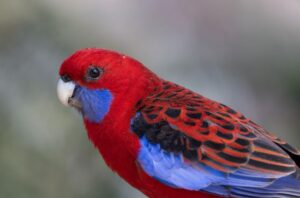
In the avian salon presided over by Brian the tree lopper, every bird had its champion, its particular human who saw in them a kindred spirit. For the sulphur-crested cockatoo, it was anyone with a taste for anarchic brilliance. For the king-parrot, it was the quiet observers. But for the Crimson Rosella, that jewel of the sandstone gullies and suburban fringe, the most vocal advocate was, unexpectedly, Troy.

Troy was a plumber from the Sutherland Shire who drove a spotless, gunmetal-grey Audi and spoke with the unwavering conviction of a man who understands pressure systems and leak-free joins. He was Brian’s friend, often sharing a post-job beer in the shade of a newly trimmed gum, and while Brian’s stories were of characters and dramas, Troy’s rants—for they were indeed rants of the most passionate kind—were about aesthetics, engineering, and sensible conduct. And they were always, inevitably, about birds of the Sydney area, in particular, rosellas.

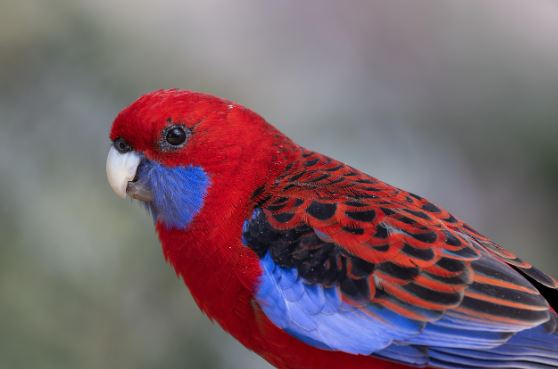
“Look at them, Brian. Just look,” Troy would begin, gesturing with his stubby bottle towards a pair foraging on the lawn. His voice, usually a practical monotone, would lift with something akin to reverence. “That colour. It’s not just red. It’s a crimson. A deep, proper, factory-finish crimson. No cheap, shiny metallic like the lorikeets. And the blue—not a sky blue, but a proper, naval, midnight-on-the- harbour blue on the wings and tail. And the spots! The black and cream scalloping on the back? That’s detail. That’s a quality finish.”

[Menu]

The Kookaburra – They are Fast!

Highly Intelligent Corellas – a type of cockatoo

The Cautious Nature of a Rosella

The Sulphur-Crested Cockatoo Redefines “Fun”

King Parrots – They watch from a distance.

Lorikeets – Little Flying Dogs

So Many Native Birds in Sydney

Creating a Native Australian Garden

To Troy, the rosella was a perfectly engineered product. Its colours were not haphazard but precisely appointed, like the flawless interior of his Audi. Its form was sleek, neither the portly bulk of a king-parrot nor the hyperactive sketch of a lorikeet. It was aerodynamic efficiency with a premium paint job.

But it was their demeanour that truly captivated the plumber’s soul. Where other birds elicited descriptions of personality—the cockatoo’s cunning, the magpie’s bravery—the rosella inspired a treatise on temperament.

“See how they approach?” he’d point out, his professional eye analysing their technique. “They don’t bomb in like hooligans. They don’t stand off in the shadows judging you. They land nearby. Ten feet away. A sensible distance.” They would peck at the grass, their dark eyes flicking up with a swift, calculated glance, assessing the risk-reward ratio of every millimetre of forward movement.

The classic test, the one that defined a bird for many, was the offered hand. A lorikeet would land on your head before you could blink. A cockatoo might deign to step up if it suspected a snack. But the rosella? Troy adored their response.

“That’s it, see?” he’d murmur, watching one eye a proffered seed in a palm. “They’re not scared. They’re not stupid. They’re… cautious. It’s a policy. They’re running the diagnostics.” He’d imagine the internal monologue: Proximity: acceptable. Human movement: currently minimal. Food source: verified. Threat matrix: all clear… for now. Recommendation: maintain current perimeter. Enjoy seed from this safe distance.

“They’re not going to step up on your finger just yet,” Troy would summarise, nodding with profound approval. “And why should they? They don’t know your service history. You haven’t proven your reliability. That’s not timidity, Brian, that’s prudence. That’s good sense.”

He loved their voices, too. Not the raucous, industrial screeching of the parrots, but the gentle, conversational piping. A sweet, descending “pee-oo-wee” that sounded, to Troy, like a polite, well-tuned alert. “It’s a notification,” he’d say. “Not an alarm. Just ‘be advised, I am here in the bottlebrush. Proceed with your activities, but be advised.’ Civilised.”

For Troy, the plumber who valued order, precision, and a job done cleanly, the Crimson Rosella was the platonic ideal of a bird. It was beauty without ostentation, presence without imposition, and a cautious, sensible intelligence that preferred a calculated observation to a reckless commitment. In a world of avian chaos—of bin-raiding cockatoos and squabbling lorikeets—the rosella was a testament to the virtues of good design and sensible protocol. They were, in his eyes, the perfect suburban cohabitants: breathtakingly gorgeous, utterly self-possessed, and absolutely unwilling to cut corners on their own safety for a cheap handful of seed. They kept their systems secure, their finish impeccable, and their interactions faultlessly polite. And as he’d finish his beer, watching them finally flutter away with a flash of that sublime blue, Troy would sigh with contentment. “Perfect,” he’d say to Brian. “Just a perfect bit of design, that.”

rosella

The Sulphur-Crested Cockatoo Redefines “Fun”

How many years do king parrots liv

The Grand Architects: How the Sulphur-Crested Cockatoo Redefines “Fun”

If Brian the tree lopper introduced me to the avian characters of Sydney, then the Sulphur-crested Cockatoo was the one who needed no introduction. It was the one who introduced itself, usually with a shriek that could strip paint and an attitude that suggested it owned the place. Where the Rainbow Lorikeet is a noisy neighbour and the King-Parrot a silent judge, the Sulphur-crested Cockatoo is something else entirely: a brilliant, anarchic architect whose idea of a good time is measured in decibels, splinters, and the systematic deconstruction of human property.

For these magnificent, hulking white birds, “fun” is not a frivolous concept. It is a primal, intellectual, and deeply satisfying pursuit that aligns perfectly with their core identity as inquisitive, powerful, and social beings. To understand this is to move past the human-centric label of “pest” and to glimpse a world of avian amusement that happens to catastrophically intersect with our own.

https://en.wikipedia.org/wiki/Cockatoo

Their primary source of joy is, unequivocally, chewing. But to call it mere chewing is to call the Sydney Opera House a shed. It is deconstructive art, stress relief, tool-making, and social bonding all rolled into one devastatingly effective beak-swing. A timber deck rail is not a boundary; it is a challenge, a puzzle of grain and glue. A window sill is not part of a house; it is a long, satisfying granola bar that reveals fascinating hollows and potentially tasty insects. Brian would point to the scalloped edges of a fascia board, each groove the perfect size of a curved beak. “See that?” he’d say, with a mix of horror and admiration. “That’s not hunger. That’s boredom. That’s a Saturday afternoon project.”

The Kookaburra – They are Fast!

Highly Intelligent Corellas – a type of cockatoo

The Cautious Nature of a Rosella

The Sulphur-Crested Cockatoo Redefines “Fun”

King Parrots – They watch from a distance.

Lorikeets – Little Flying Dogs

So Many Native Birds in Sydney

Creating a Native Australian Garden

This destructive play serves multiple purposes. It keeps their formidable beaks—which can crack macadamia nuts with ease—in perfect trim. It provides essential mental stimulation for a creature often compared to a toddler with bolt-cutters in terms of intelligence and curiosity. And, crucially, it is a social activity. A pair or a gang of cockatoos will happily spend hours reducing a prized merbau pergola to a pile of splinters, communicating with constant, satisfied grumbles and squawks. The shared endeavour, the communal noise, the tangible result: it’s a team-building exercise with a tangible, if costly, outcome.

Which brings us to the modern addition to their playground: the solar panel. To a cockatoo, this sleek, glassy installation on a sunny roof is the ultimate multifunctional leisure centre. Firstly, it is a superb mirror. The sight of their own imposing reflection—the flaring sulphur crest, the hunched shoulders—promises a thrilling, lifelong rivalry with a bird that never backs down. The subsequent pecking and scratching at this insolent doppelgänger is both combat and vanity.

Secondly, the space beneath the panel is a coveted nesting or roosting spot: sheltered, warm, and predator-proof. Gaining access, however, requires renovation. The persistent gnawing at cabling, the prising up of edges, the removal of obstructive brackets—this is not vandalism. This is home improvement. They are simply customising their new penthouse suite, oblivious to the fact it was designed to power our dishwashers.

For Brian, witnessing this from his treetop vantage was a masterclass in adaptive behaviour. “They used to strip the cedar shingles off old water tanks for nesting material,” he mused one day, watching a trio investigate a neighbour’s shiny new array. “Now it’s PV cables. They’re not trying to ruin it. They’re just using what we give them. We built them a city full of perfect chew toys and then act surprised when they play.”

Their fun is underscored by a breathtaking intelligence. They learn from each other. A technique for opening a wheelie bin, pioneered by one enterprising bird in one suburb, becomes group knowledge within weeks, spreading like a viral trend across the city. The satisfying pop of a solar panel junction box lid flying off is a sound of victory, a puzzle solved, a new game unlocked.

To live alongside the Sulphur-crested Cockatoo is to accept a fundamental truth: our human landscape is their enrichment zone. The destruction they leave in their wake—the gnawed furniture, the shredded weatherboards, the disabled solar arrays—is, from their perspective, merely the by-product of a life well-lived. It is the evidence of games played, skills honed, bonds strengthened, and territories explored. They are the ultimate players in a city they never agreed to share, finding endless fun in the very things we build to separate ourselves from the wild. In their raucous, destructive joy, they remind us that nature’s most compelling forces are not always gentle, quiet, or compatible with double-glazed windows. They are loud, brilliant, and uncompromisingly fun—on their own terms.

rosella bird

King Parrots – They watch from a distance.

King parrot lifespan in the wild

King Parrots – They watch from a distance.

But then, Brian would pause. He’d take a long sip from his water bottle, his eyes scanning the quieter, deeper green of the back fences and the remnant patches of bush.

https://en.wikipedia.org/wiki/Australian_king_parrot

And he’d talk about the other birds of the neighbourhood. The ones who don’t scream.

“Now, the king-parrots,” he’d say, his voice softening. “That’s a different story. You don’t find them. They find you. And they watch.”

He said on the job, high up in the harness with the saw quiet, you’d feel it. A sense of being… observed. You’d look over, and there, on a thick, horizontal branch in the next yard over, or deep in the dappled shadow of a lilly pilly, would be this… this statue of a bird.

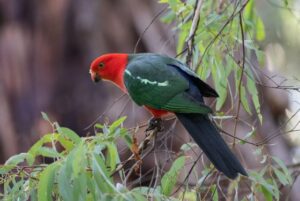
“The males,” Brian described, “are like something from a storybook. That red, it’s not a flashy red. It’s a deep, velvety crimson, like a royal cloak. And the green on his wings? It’s the dark, shimmering green of the deep forest floor. He doesn’t move. He just… perches. Solid. Calm.”

He said the experience was always the same. The king-parrot wouldn’t flinch at the noise from the street or the distant shriek of the lorikeets. Its dark eye would just be fixed on you, this quiet, inscrutable orb taking your measure.

“It’s not like the cockatoo, which is sizing you up for intelligence, or the miner bird, which is just deciding if you’re a threat. The king-parrot… it feels more philosophical. Like he’s the steward of this place, and you’re the temporary visitor with the loud machine. He’s waiting to see if you understand that. If you’ll be respectful.”

The Kookaburra – They are Fast!

Highly Intelligent Corellas – a type of cockatoo

The Cautious Nature of a Rosella

The Sulphur-Crested Cockatoo Redefines “Fun”

King Parrots – They watch from a distance.

Lorikeets – Little Flying Dogs

So Many Native Birds in Sydney

Creating a Native Australian Garden

Brian said the magic was in the contrast. After the rainbow lorikeets—all noise and speed and liquid colour—the king-parrot was a study in stillness and profound, elegant colour. It was the difference between a shout and a deep, thoughtful silence.

“They’re shy, see,” he’d explain, coiling a rope with slow, deliberate hands. “They don’t come for the chaos. They come for the quiet after. You have to earn their appearance. Do the job carefully, don’t thrash the tree, leave some habitat… and sometimes, if you’re lucky, they’ll just be there at the end of the day, watching you pack up.”

He made it sound like a benediction. To be observed, and deemed unobtrusive enough, by this feathered gentleman in his emerald and scarlet waistcoat.

“They’re the quiet judges of the suburbs,” Brian concluded, a smile playing on his lips. “The lorikeets own the soundtrack. But the king-parrots? They hold the deed.”

rosella

Lorikeets – Little Flying Dogs

How many years do king parrots liv

Lorikeets? You can hear them bark!

You know, people talk about the elegant cockatoos, the wise old owls… but let me tell you about the real characters of the Sydney sky. The Rainbow Lorikeets.

Brian, the tree lopper, he didn’t just show me the birds of Sydney. He introduced me to the neighbourhood.

And these guys? These lorikeets? They’re not birds. They’re flying dogs.

Seriously. Think about it.

First, the energy. They don’t arrive. They invade. One minute, the tree is quiet. The next, it’s a riot of green and blue and sun-yellow and that ridiculous slash of scarlet, like they’ve all been dipped in a manic paintbox. They don’t land so much as crash into the foliage, wings flapping, tails bashing about, a rolling, squawking avalanche of feathers.

And the noise. Oh, the noise. It’s not a song. It’s not a call. It’s a constant, urgent, indignant commentary. A metallic, rolling shriek. Scree-ark-ark-ark! Chik-a-chik-chik!

Brian would laugh, wiping sawdust from his ear. “Hear that?” he’d say, nodding up at the blooming gum. “That’s the ‘Get Off My Lawn!’ bark. That’s the ‘I Saw That Blossom First!’ bark. That’s the ‘The Sky Is Mine And Also This Branch Is Mine’ bark.”

[Menu]

The Kookaburra – They are Fast!

Highly Intelligent Corellas – a type of cockatoo

The Cautious Nature of a Rosella

The Sulphur-Crested Cockatoo Redefines “Fun”

King Parrots – They watch from a distance.

Lorikeets – Little Flying Dogs

So Many Native Birds in Sydney

Creating a Native Australian Garden

And he was right. They have all the territorial spite of a terrier, but with a jetpack. They bicker with each other over the best flower. They dive-bomb the poor, peace-loving king-parrots who just want a quiet seed. They scream at the magpies, who are twice their size and don’t take any nonsense. They even yell at the sky, just on principle.

But then… you watch them. Just for a moment, in a lull between arguments. You see one, hunched over a deep crimson bottlebrush, its little tongue a specialised brush, drinking the nectar with this look of pure, focused bliss. It’s a tiny, feathered hedonist. It lives for sugar and sunlight and the sheer joy of being a blindingly colourful nuisance.

And you realise… that’s their secret. That’s the magic. They’re not actually angry. They’re just… passionately, vocally, alive. Every moment is the best or worst moment ever, and the whole street needs to hear about it. They’re loyal, too—they mate for life, these little clowns, screaming their devotion from the rooftops.

So now, when that familiar screeching racket erupts outside my window, I don’t sigh. I smile. I picture Brian, looking up from his ropes with that knowing grin.

The flying dogs are on patrol. The lawn of the sky is being fiercely, beautifully, defended. And Sydney wouldn’t be Sydney without their brilliant, barking chorus.

https://en.wikipedia.org/wiki/Rainbow_lorikeet

crimson rosella

So Many Native Birds in Sydney

How long do king parrots live

The Feathered Tapestry: Lorikeets, Cockatoos, Rosellas and King Parrots

lorikeet in a treeFor years, I saw Sydney’s avian life as little more than a pleasant, noisy backdrop. The raucous squawks at dawn were simply the city waking up; the flashes of colour in the canopy were peripheral details, overshadowed by the harbour’s glitter or the architecture’s grandeur. I didn’t really care much and had never visited any facebook page all about australian birds. That all changed, not through a guided tour or a glossy book, but through Brian, a tree lopper with sawdust in his boots and a twinkle in his eye.
And Imust admit later on i did visit the Australian bird website he had mentioned and of course there were amazing videos of these guys all over the place.

Brian arrived one autumn morning to prune a towering, unruly gum in our backyard. As he surveyed the tree, rope in hand, he didn’t just see limbs and leaves. He pointed a calloused finger upward. “See that hollow? About fifteen feet up on the north side? That’s a busy apartment block right there. Listen.” We stood in silence, and soon, a soft chattering emerged. Then, a vibrant green head with a shock of scarlet popped out. “Rainbow Lorikeets,” Brian whispered, as if sharing a secret.

The Kookaburra – They are Fast!

Highly Intelligent Corellas – a type of cockatoo

The Cautious Nature of a Rosella

The Sulphur-Crested Cockatoo Redefines “Fun”

King Parrots – They watch from a distance.

Lorikeets – Little Flying Dogs

So Many Native Birds in Sydney

Creating a Native Australian Garden

Australian Art | The Culture, Nature & Soul of Sydney Living

“Breakfast club. They’ll be squabbling over the last of the gum blossoms.” He didn’t just identify them; he narrated their lives. As he worked, carefully directing branches away from the hollow, he explained how these gregarious parrots, once uncommon in the city, had thrived on garden blossoms and suburban generosity, weaving a tapestry of electric colour through the skies.

australianbirdguide – lorikeets

australianbirdguide – rosellas

australianbirdguide – cockatoos

australianbirdguide – king parrots

His work was a masterclass in quiet observation. While his chainsaw slept,cockatoo looking for any reason to scream he’d point out the subtler locals. “Hear that sweet, chuckling warble?” he’d ask, pausing mid-coffee. “That’s our little man, the Red-browed Finch.” Following his gaze, I finally saw them—tiny, discreet birds with olive wings and, true to their name, perfect dashes of crimson above their eyes, fussing in the lawn for seeds.
They were always there, Brian said, a quiet understory to the lorikeets’ carnival. He knew their preference for sheltered grasses, advising us to leave a patch of our garden a little wild. “They like a bit of mess, nature does,” he’d chuckle.

Then came the morning of the Sulphur-crested Cockatoos, which , I didn’t know, were related to those nice little Corellas. A deafening screech announced their arrival like feathered rock stars. Three enormous, pristine white birds landed with a thud in the neighbour’s casuarina, their brilliant yellow crests raised defiantly. I winced at the noise. Brian, however, grinned with admiration.

“Now, there’s a dinosaur for you,” he said. “Smart as a whip. See that one there, working at the dead branch? He’s not just chewing; he’s crafting a tool to dig out grubs.” He spoke of them not as pests, but as ingenious, complex characters. He recounted stories from his job of cockatoos learning to open wheelie bins, their complex social structures, and their heartbreaking loyalty. “They mate for life, you know. You see one, the other’s never far. They’ve got more going on than most people I know.”

king parrot lifespan is about 35 years and they are not endangered
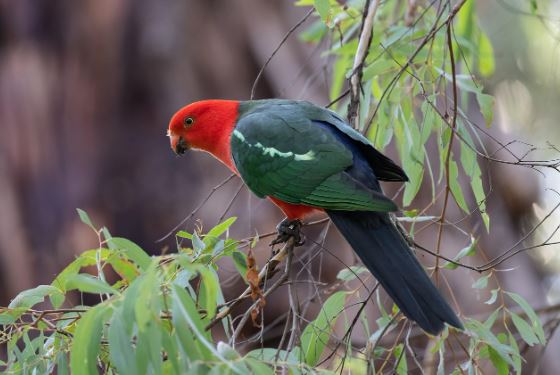
Male King Parrot

Through Brian’s eyes, our garden and the surrounding suburbs transformed from a simple landscape into a layered, feathered metropolis. He introduced me to the portly, comical Australian King-Parrot, the males a stunning cloak of scarlet and green, who came for seed at dusk with a shy dignity.

He taught me to distinguish the melodic carolling of the Magpie—a sound I’d heard all my life—from its defensive cackle, explaining their territorial ways with a balanced respect. He even mourned the absence of the once-common Laughing Kookaburra from our street, a victim of shrinking habitats. “Used to hear them every morning,” he’d say, looking at the shrinking bushland at the street’s end. “Best alarm clock in the world.”

Brian, the tree lopper, was an unlikely but perfect guru. His profession, which I had naively assumed was one of removal, was in fact one of intimate encounter. He worked at the frontier where human and wild spaces met, and in that space, he paid attention. He understood that every tree was more than timber; it was a pantry, a nursery, a fortress, and a crossroads.

Long after the last branch was chipped and his truck had rumbledrosellas - so peaceful away, Brian’s legacy remained. Now, when a screech pierces the dawn, I don’t just hear noise; I picture a white cockatoo couple, plotting their daily adventures. The chattering in the grevillea is a Rosella debate I’m privy to. The soft twitter in the long grass is a finch family going about its delicate business.

https://en.wikipedia.org/wiki/Birds_of_Australia

rosella

Tim the Arborist of the West and North

King parrot life expectancy

Branches and Buffers: An Arborist’s Tale of Two Sydneys

He loves them both

I first met Tim at a busy M4 petrol station, his white ute looking less like a vehicle and more like a hardware store on wheels. Chainsaws, climbing ropes, and helmets were strapped down in the tray, while the cabin brimmed with helmets, log books, and the faint, sweet scent of eucalyptus oil and fresh-cut timber. He was refuelling before a big job, a bloke with sun-leathered arms and the calm, observant eyes of someone used to assessing risks from great heights. As the pump clicked off, I asked him the question that had been bouncing around my head: given a choice, does he prefer the tough, sprawling tree work of Western Sydney or the intricate, high-stakes jobs of the Northern Beaches?

Tim let out a short, knowing laugh and leant against his ute, its suspension sighing under the weight of a career’s worth of gear. “Ah, you can’t really compare them,” he said, wiping grease from his hands. “It’s like asking if I prefer my oldest, heaviest splitting axe or my sharpest, most expensive handsaw. They’re for completely different jobs. The west and the beaches… they’re different worlds. Different trees, different soils, different headaches, and different rewards.”

The West: Grit, Growth, and Getting It Done

“Out west,” Tim began, nodding toward the highway’s inland stream of traffic, “it’s about raw scale and endurance. You’re dealing with survivors—huge, old River Red Gums, gnarly Angophoras, and massive Cypresses that have seen a century of hot summers on those big, flat blocks.” He patted the heavy-duty winch bolted to his ute’s tray. “You need all this gear and more. The soil’s hard clay that bakes in the sun, and in summer, you’re racing the sun itself. You start at dawn, and by 10 AM the heat’s shimmering off the ground. The work is physically brutal. The wood’s harder, the trees are often stressed, which makes them unpredictable. But there’s a real, solid satisfaction to it. It’s hard yakka, but you see the result right away—a giant safely on the ground, a fire hazard eliminated. People out there are usually straightforward; they’ve got a problem, and they need you to solve it.”

[Menu]

The Northern Beaches: Precision, Pressure, and Perfect Landscapes

Then, his tone shifted, as if he could smell the salt air. “Now, the Northern Beaches… that’s another universe. It’s not about brute force; it’s about being a surgeon, a strategist, and a bit of a diplomat all at once.”

He gestured to the meticulously organised toolboxes in his ute. “Up there, every single one of these tools has a specific, delicate purpose. Access is your first battle. You’re navigating cliff-side drives, streets barely wider than this ute, and backyards that are more like obstacle courses with swimming pools, glass houses, and priceless views. You’re not just removing a tree; you’re performing surgery in a living gallery.”

The real difference, Tim stressed, is the pressure that comes from everything around the tree. “That’s not just a backyard. It’s a landscaped masterpiece. That tree isn’t just a tree; it’s part of someone’s harbour view or a protected bit of bushland. The neighbour is on the phone to council before your boots are on the ground. You need more paperwork—arborist reports, council permits, heritage impact statements—than you do rigging rope. It’s a high-wire act, but without the safety net of a wide-open space.”

The Verdict: Two Halves of a Whole

So, does he have a favourite? Tim just shook his head with a smile. “It’s not about liking one more. They balance each other out. The west keeps you strong and honest—it tests your gear, your crew, and your grit. It’s the foundation. The Beaches test your skill, your patience, and your knowledge of every council rule ever written. It’s the finesse.”

He explained that the variety is what keeps the job alive. “A week spent wrestling a storm-damaged Gum in Windsor makes you appreciate the slow, precise, crane-assisted dismantle of a Norfolk Pine in Avalon the next week. In the west, the main battle is often the tree itself and the elements. On the beaches, the tree is just one character in a drama that includes local politics, geology, and real estate prices.”

The Common Thread: Tools, Trade, and Respect

As he prepared to jump back in his ute, Tim pointed to the chaos of equipment behind him. “See all this? Whether I’m headed to Penrith or Palm Beach, the core is the same: respect for the tree, safety for my mates, and using the right tool for the job. ‘Lopping’ is a dirty word in both postcodes. Real arboristry is science and craft. It’s knowing how to read a tree’s structure, whether it’s standing in cracking clay or perched on sandstone.”

“The west,” he concluded, firing up the engine, “is like a strong black coffee—powerful, no-nonsense, and it gets the job done. The Northern Beaches is a perfectly flat white—smoother, more delicate, and everyone has an opinion on how it should be made. Me? I’ve got to be expert at making both.”

With a wave, he pulled his laden ute back into the Sydney traffic, a craftsman equally at home in the city’s two very different, equally demanding, arboreal worlds.

https://www.northernbeaches.nsw.gov.au/things-to-do/visit

rosella

Sydney Tree Lopping and Removal Cost

How long can king parrots live

How Much Does Tree Lopping Cost in Sydney? (Price Factors Explained)

First, A Critical Reframe: “Lopping” vs. Professional Arborist Services

Before discussing costs, it’s essential to clarify terminology. In Sydney, “tree lopping” refers to the unregulated, damaging practice of indiscriminately cutting branches to stubs. It is:

  • Often illegal under council Tree Preservation Orders (TPOs)

  • Harmful to tree health and structure

  • Dangerous, as it promotes weak, hazardous regrowth

  • Not performed by qualified, insured arborists

What you’re likely seeking—and what this guide covers—is the cost of professional tree services performed to Australian Standards (AS4373) by qualified arborists. This includes pruning, removal, stump grinding, and hazard reduction.


Sydney Tree Service Cost Ranges (2024/2025 Estimates)

Important: These are guideline estimates only. Every job is unique and requires an on-site quote.

Service Type Low-End Mid-Range High-End/Complex What’s Included
Basic Pruning/Thinning $300 – $800 $800 – $2,500 $2,500 – $5,000+ Selective branch removal, canopy lifting, health pruning. Price scales with tree size.
Medium Tree Removal (10-15m) $800 – $2,500 $2,500 – $5,000 $5,000 – $8,000+ Full removal, sectional dismantling, basic cleanup. Most common suburban job.
Large Tree Removal (15m+) $2,500 – $5,000 $5,000 – $10,000 $10,000 – $20,000+ Complex rigging, crane hire, traffic management, full cleanup.
Stump Grinding $150 – $400 $400 – $800 $800 – $1,500+ Grinding to specified depth. Price by diameter and access.
Emergency/After-Hours +50% to +100% above standard rates Immediate hazard response, often outside business hours.
Hedge Trimming $80 – $150/hr $150 – $300/hr Varies Typically charged by the hour or per metre length.

The 8 Key Factors That Determine Your Final Cost

1. Tree Size, Species & Condition

  • Height & Canopy Spread: The primary cost driver. Taller, wider trees require more time, complex rigging, and potentially cranes.

  • Trunk Diameter: Thick trunks (over 60cm DBH) increase cutting time, waste volume, and equipment needs.

  • Species: Hardwoods (e.g., Ironbark) are harder to cut than softwoods. Some species (like certain Ficus or Pines) have dense, resinous wood or excessive sap flow.

  • Condition: Dead, rotten, or unstable trees are more expensive due to increased risk and careful handling requirements.

Tim the Arborist of the West and North

Sydney Tree Lopping and Removal Cost

Best Time of Year to “Lop” Trees in Sydney’s Climate

Tree Lopping Near Power Lines in Sydney

Signs Your Sydney Tree Needs Urgent Lopping

Council Approval to Lop a Tree in Sydney?

Brian the Artist and Tree Lopper

A Chat with a Maintenance Man of Two Sydneys

Australian Art | The Culture, Nature & Soul of Sydney Living

2. Site Accessibility & Complexity

  • Easy Access (Flat, clear yard): Lower cost.

  • Complex Access: Adds significant cost. Factors include:

    • Tight rear yards with no side gate

    • Sloping or unstable ground

    • Proximity to power lines (requires ASP-accredited arborists, possible network shutdown fees)

    • Close proximity to houses, pools, fences, or other “targets”

    • Limited street parking for equipment

3. Required Equipment & Labour

  • Basic Job: Chainsaws, chipper, 2-3 crew members.

  • Complex Job: May require:

    • Crane Hire: $1,500 – $5,000+ per day. Needed for confined spaces or large trees.

    • Elevated Work Platform (EWP): $500 – $1,500 per day.

    • Traffic Management: If road closure is needed, requires certified controllers and permits.

    • Specialist Rigging Gear: For controlled lowering over structures.

4. Green Waste Removal & Disposal

  • Most quotes include chipping and removal of all debris.

  • Sydney Tip Fees: Arborists pay ~$200-$400 per tonne at waste facilities. Large trees generate substantial waste.

  • Optional mulch retention may reduce costs slightly.

5. Stump Management

  • Stump Grinding: Separate cost (see table above). Depth (usually 300-600mm) affects price.

  • Full Stump Removal (excavation): Much more expensive ($1,000-$3,000+), requiring excavators and major site disturbance.

6. Council Approval & Reports

  • Council Application Fees: $50 – $150 (non-refundable if denied).

  • Arborist Report (if required): $300 – $800+ from a Level 5 Consulting Arborist. Often needed for large/regulated trees.

  • This is a separate cost from the physical work. Never proceed without confirming approval requirements.

7. Urgency & Scheduling

  • Planned, non-urgent work: Best pricing.

  • Emergency/Storm damage: Premium rates for immediate response.

  • Off-peak season (Autumn/Winter): Possible slight discounts as arborists are less busy.

8. The Company You Hire: Qualification & Insurance

  • “Cash-in-hand loppers”: May quote 50-70% less. EXTREMELY HIGH RISK. They typically lack:

    • Public Liability Insurance ($20M minimum required): You are liable for any damage or injury.

    • Proper Qualifications (AQF Level 3+): Work will not meet Australian Standards.

    • Safety Protocols: Risk of property damage or fatal injury is severe.

  • Reputable, Insured Arborist Company: Higher upfront cost, but includes safety, compliance, professionalism, and warranty.


The Hidden Costs of Choosing the Cheapest Option

Choosing an unqualified “lopper” based on price can lead to massive additional costs:

  • Council Fines: Up to $110,000 for illegal tree work in Sydney.

  • Property Damage Repairs: To your or your neighbour’s roof, fence, or plumbing.

  • Liability Claims: If a worker is injured on your property without insurance.

  • Tree Replacement Orders: Courts can order you to replant with mature specimens at costs of $10,000+.

  • Future Remediation: Fixing bad pruning often costs more than doing it right the first time.


How to Get an Accurate Quote: A Checklist

  1. Get 3 On-Site Quotes: Reputable arborists will always inspect first.

  2. Verify Credentials: Ask for:

    • Proof of Public Liability & Workers Comp Insurance

    • Arborist Licence/AQF Certification (check via Arboriculture Australia)

    • References or examples of past work

  3. Ensure Detailed Written Quote Includes:

    • Exact scope of work (what WILL and WON’T be done)

    • Total price (GST inclusive)

    • Cleanup and waste removal details

    • Start/completion dates

    • Payment terms (deposit, progress, completion)

  4. Ask About Council Compliance: “Will you handle the DA process if needed?”


Sample Cost Scenarios for Sydney

Scenario 1: Basic Maintenance

  • Job: Prune a 10m Lilly Pilly, lift canopy over driveway, general thinning.

  • Access: Easy, front yard.

  • Council Approval: Not required (under size limit in area).

  • Estimated Cost: $700 – $1,200

Scenario 2: Standard Suburban Removal

  • Job: Remove a 12m dying Eucalypt in a rear yard with 2m side gate access.

  • Access: Moderate; requires careful rigging over a shed.

  • Council Approval: Required; application fee + arborist report needed.

  • Estimated Cost: $3,500 – $5,500 (including approval process)

Scenario 3: Complex, High-Risk Removal

  • Job: Remove a 20m Norfolk Island Pine leaning over a heritage house and main road.

  • Access: Difficult; requires traffic control, crane, and specialist rigging.

  • Council Approval: Required; likely heritage constraints.

  • Estimated Cost: $15,000 – $25,000+


Conclusion: Invest in Value, Not Just Price

In Sydney, professional tree work is a significant investment in your property’s safety, aesthetics, and value. While costs can range from a few hundred to tens of thousands of dollars, the key is to budget for qualified, insured expertise and necessary council compliance.

The safest formula:
Accurate Cost = (Tree Complexity + Site Access) x (Arborist Expertise + Equipment) + Council Fees + Waste Disposal

Always start by consulting your local council’s website for Tree Preservation Orders, then engage a minimum of three AQF-certified arborists for detailed, on-site quotes. The cheapest option is often the most expensive mistake you can make.

rosella bird

Posts navigation

1 2
Scroll to top