The Feathered Tapestry: Lorikeets, Cockatoos, Rosellas and King Parrots
 For years, I saw Sydney’s avian life as little more than a pleasant, noisy backdrop. The raucous squawks at dawn were simply the city waking up; the flashes of colour in the canopy were peripheral details, overshadowed by the harbour’s glitter or the architecture’s grandeur. I didn’t really care much and had never visited any facebook page all about australian birds. That all changed, not through a guided tour or a glossy book, but through Brian, a tree lopper with sawdust in his boots and a twinkle in his eye.
And Imust admit later on i did visit the Australian bird website he had mentioned and of course there were amazing videos of these guys all over the place.
Brian arrived one autumn morning to prune a towering, unruly gum in our backyard. As he surveyed the tree, rope in hand, he didn’t just see limbs and leaves. He pointed a calloused finger upward. “See that hollow? About fifteen feet up on the north side? That’s a busy apartment block right there. Listen.” We stood in silence, and soon, a soft chattering emerged. Then, a vibrant green head with a shock of scarlet popped out. “Rainbow Lorikeets,” Brian whispered, as if sharing a secret.
The Kookaburra – They are Fast!
Highly Intelligent Corellas – a type of cockatoo
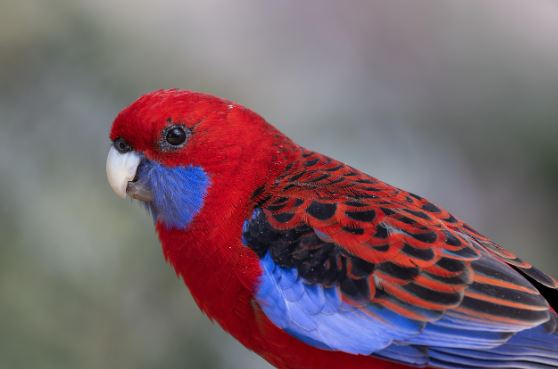
The Cautious Nature of a Rosella
The Sulphur-Crested Cockatoo Redefines “Fun”
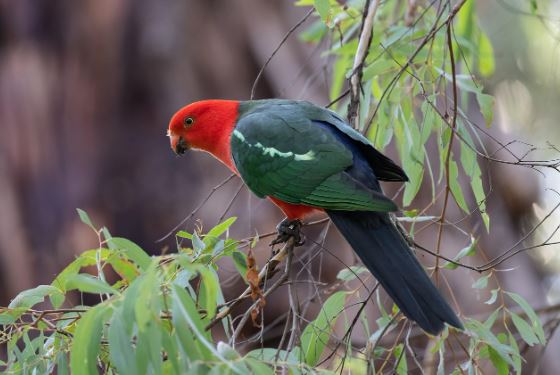
King Parrots – They watch from a distance.
Lorikeets – Little Flying Dogs
So Many Native Birds in Sydney
Creating a Native Australian Garden
Australian Art | The Culture, Nature & Soul of Sydney Living
“Breakfast club. They’ll be squabbling over the last of the gum blossoms.” He didn’t just identify them; he narrated their lives. As he worked, carefully directing branches away from the hollow, he explained how these gregarious parrots, once uncommon in the city, had thrived on garden blossoms and suburban generosity, weaving a tapestry of electric colour through the skies.
australianbirdguide – lorikeets
australianbirdguide – rosellas
australianbirdguide – cockatoos
australianbirdguide – king parrots
His work was a masterclass in quiet observation. While his chainsaw slept, he’d point out the subtler locals. “Hear that sweet, chuckling warble?” he’d ask, pausing mid-coffee. “That’s our little man, the Red-browed Finch.” Following his gaze, I finally saw them—tiny, discreet birds with olive wings and, true to their name, perfect dashes of crimson above their eyes, fussing in the lawn for seeds.
They were always there, Brian said, a quiet understory to the lorikeets’ carnival. He knew their preference for sheltered grasses, advising us to leave a patch of our garden a little wild. “They like a bit of mess, nature does,” he’d chuckle.
Then came the morning of the Sulphur-crested Cockatoos, which , I didn’t know, were related to those nice little Corellas. A deafening screech announced their arrival like feathered rock stars. Three enormous, pristine white birds landed with a thud in the neighbour’s casuarina, their brilliant yellow crests raised defiantly. I winced at the noise. Brian, however, grinned with admiration.
“Now, there’s a dinosaur for you,” he said. “Smart as a whip. See that one there, working at the dead branch? He’s not just chewing; he’s crafting a tool to dig out grubs.” He spoke of them not as pests, but as ingenious, complex characters. He recounted stories from his job of cockatoos learning to open wheelie bins, their complex social structures, and their heartbreaking loyalty. “They mate for life, you know. You see one, the other’s never far. They’ve got more going on than most people I know.”
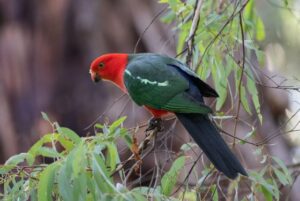
Through Brian’s eyes, our garden and the surrounding suburbs transformed from a simple landscape into a layered, feathered metropolis. He introduced me to the portly, comical Australian King-Parrot, the males a stunning cloak of scarlet and green, who came for seed at dusk with a shy dignity.
He taught me to distinguish the melodic carolling of the Magpie—a sound I’d heard all my life—from its defensive cackle, explaining their territorial ways with a balanced respect. He even mourned the absence of the once-common Laughing Kookaburra from our street, a victim of shrinking habitats. “Used to hear them every morning,” he’d say, looking at the shrinking bushland at the street’s end. “Best alarm clock in the world.”
Brian, the tree lopper, was an unlikely but perfect guru. His profession, which I had naively assumed was one of removal, was in fact one of intimate encounter. He worked at the frontier where human and wild spaces met, and in that space, he paid attention. He understood that every tree was more than timber; it was a pantry, a nursery, a fortress, and a crossroads.
Long after the last branch was chipped and his truck had rumbled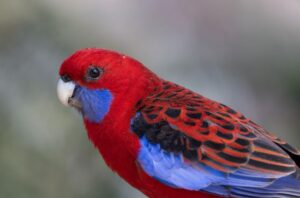 away, Brian’s legacy remained. Now, when a screech pierces the dawn, I don’t just hear noise; I picture a white cockatoo couple, plotting their daily adventures. The chattering in the grevillea is a Rosella debate I’m privy to. The soft twitter in the long grass is a finch family going about its delicate business.
https://en.wikipedia.org/wiki/Birds_of_Australia