The Kookaburra – Zero to Sausage in 1 Second
There’s a certain stillness that descends in the hour after Brian’s truck has rumbled away, a quiet laced with the faint scent of eucalyptus sap and freshly turned earth. It’s in these moments that the garden’s native feathered friends cautiously re-emerge. But on one particular afternoon, as Brian was packing his final coil of rope, a different presence announced itself. Not with a shriek or a warble, but with the deep, guttural chortle of a butcher bird, followed by the unmistakable, rollicking laugh of a Laughing Kookaburra, perched like a sentinel on the dead spar of the Angophora next door.
“Ah, the boss is here,” Brian murmured, looking up with a glint in his eye.
We’d seen them before—these stocky, kingfisher-blue monarchs of the suburban timber—but always at a distance, surveying their domain with that formidable, spear-like beak. They were icons of sound, their chorus a quintessential Australian soundtrack, but up close, they were aloof, all business.
Brian, still holding the remains of his lunch—a humble barbequed sausage wrapped in a single slice of white bread—paused. A slow, mischievous grin spread across his face. He looked from the sausage to the kookaburra, some twenty metres away, its head cocked with a look of supreme, disinterested judgement.
“Watch this,” he said, his voice low.
He didn’t call out. He didn’t make a gentle, coaxing noise. He simply broke off a generous chunk of the sausage, held it pinched between his thumb and forefinger, and raised his arm high. He gave it a slow, deliberate wave against the sky, like a chef presenting a rare truffle. It was a flag of meat, a dare.
[Menu]
- A Chat with a Maintenance Man of Two Sydneys
- A Journey Through Sydney’s Heritage Homes
- Best Time of Year to “Lop” Trees in Sydney’s Climate
- Brian the Artist and Tree Lopper
- Council Approval to Lop a Tree in Sydney?
- Crafting a Sydney Sanctuary: A Garden Design Philosophy Rooted in Place and Purpose
- Creating a Native Australian Garden
- Highly Intelligent Corellas – a type of cockatoo
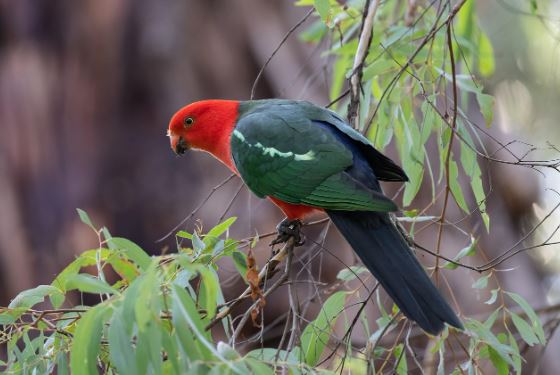
- King Parrots – They watch from a distance.
- Lorikeets – Little Flying Dogs
- Signs Your Sydney Tree Needs Urgent Lopping
- So Many Native Birds in Sydney
- Susan and the Plumber
- Sydney Outdoor Services
- Sydney Tree Lopping and Removal Cost
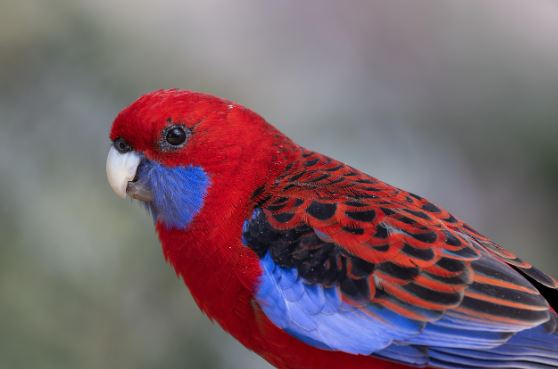
- The Cautious Nature of a Rosella
- The Great Outdoors Room
- The Sulphur-Crested Cockatoo Redefines “Fun”
- Tim the Arborist of the West and North
- Tree Lopping Near Power Lines in Sydney
- Your Essential Pre-Storm Checklist: Sydney Edition
The Kookaburra – They are Fast!
Highly Intelligent Corellas – a type of cockatoo
The Cautious Nature of a Rosella
The Sulphur-Crested Cockatoo Redefines “Fun”
King Parrots – They watch from a distance.
Lorikeets – Little Flying Dogs
So Many Native Birds in Sydney
Creating a Native Australian Garden
For three heartbeats, nothing happened. The kookaburra remained a statue, its dark eye fixed on the offering. The world seemed to hold its breath. Then, physics changed.
There was no tentative flutter, no cautious hop from branch to branch. The bird simply unleashed itself. It was a feathered torpedo, a bolt of brown, white, and blue fired from a silent cannon. Its wings, a blur of purpose, made a single, powerful whump as they drove the body forward in a dead-straight, ruthlessly efficient line. It didn’t soar; it zoomed. There was no curve, no arc of approach, no last-minute adjustment of brakes.
It was a snatch-and-grab executed with military precision. One second the sausage was in Brian’s fingers, the next there was a sudden, startling vacuum of air, a faint swish, and it was gone. The kookaburra’s beak, that formidable pickaxe, had plucked the morsel with impossible delicacy and force all at once. Not a single knuckle was grazed.
And then it was over. The bird didn’t land. It didn’t pause to gloat. In one seamless, continuous motion, it completed its intercept, curved upwards with a few mighty wingbeats, and powered straight back to its original perch, the prize clamped securely. It gave a few satisfied, muffled chuckles, swallowed the sausage in one triumphant gulp, and resumed its regal survey of the kingdom, as if the whole explosive interlude had been a minor, albeit pleasing, administrative task.
Brian stood frozen, arm still outstretched, fingers now empty. For a moment, he just stared at his hand, then at the bird. And then it came: the biggest, most unguarded grin I had ever seen on his weathered face. It wasn’t just a smile; it was a beacon of pure, unadulterated delight. His eyes crinkled shut, and a booming, joyful laugh erupted from him, echoing the kookaburra’s own.
“Did you SEE that?!” he whooped, turning to me. “No brakes! Absolutely no brakes! He just… committed!”
He was practically giddy, a child who’d just witnessed magic. All his professional knowledge, his years of cataloguing bird behaviours—the caution of the rosella, the cunning of the corella, the chaos of the cockatoo—melted away in the face of this raw, ballistic audacity.
“That,” he said, shaking his head in awe, still beaming, “is a predator. A proper, honest-to-goodness predator. We forget, with all their laughing. They’re kingfishers! That beak isn’t for singing. It’s for whacking snakes and mice and… well, for intercepting flying snags, apparently.”
He packed the rest of his gear with that grin still plastered on his face, chuckling to himself. The encounter had gifted him something rare: a pure, unscripted moment of wildness. It wasn’t a careful observation or a lesson in adaptation. It was a demonstration of sheer, fearless capability. The kookaburra hadn’t been tamed or coaxed; it had assessed a risky opportunity, calculated the trajectory, and seized it with breathtaking confidence, reminding the tree lopper—and me—that for all our fences and lawns, we are still living in their world, governed by older, sharper laws.
Long after Brian left, the kookaburra remained on its branch, occasionally letting out a soft chuckle. I could almost swear it was laughing with him, sharing the private joke of the sausage heist. And every time I hear that raucous chorus now, I don’t just hear a symbol of the bush. I see a blue-and-brown blur against the sky, no brakes, and the biggest, most brilliant grin on a man who thought he knew all the surprises the trees could hold.
 For years, I saw Sydney’s avian life as little more than a pleasant, noisy backdrop. The raucous squawks at dawn were simply the city waking up; the flashes of colour in the canopy were peripheral details, overshadowed by the harbour’s glitter or the architecture’s grandeur. I didn’t really care much and had never visited any
  he’d point out the subtler locals. “Hear that sweet, chuckling warble?” he’d ask, pausing mid-coffee. “That’s our little man, the Red-browed Finch.” Following his gaze, I finally saw them—tiny, discreet birds with olive wings and, true to their name, perfect dashes of crimson above their eyes, fussing in the lawn for seeds.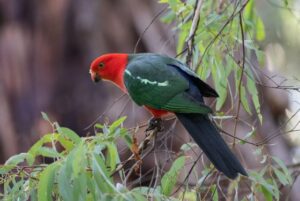
 away, Brian’s legacy remained. Now, when a screech pierces the dawn, I don’t just hear noise; I picture a white cockatoo couple, plotting their daily adventures. The chattering in the grevillea is a