Echoes in Ornate Cornices: A Journey Through Sydney’s Heritage Homes
There’s a particular hush that exists inside a heritage-listed home, a palpable silence woven from decades of whispered conversations, the ghost of footsteps on original Baltic pine, and sunlight filtered through generations of glass. It’s a silence that speaks. Recently, driven by a mix of historical curiosity and real-estate reverie, we embarked on a series of open-house inspections, not in search of a purchase, but of a feeling. Our journey took us through the sanctums of Sydney’s established wealth—to Mosman, Vaucluse, and Hunters Hill—to walk the floorboards of preserved history and, quite unexpectedly, to have that history interrupted by the most vivacious of contemporary life.
https://en.wikipedia.org/wiki/List_of_heritage_houses_in_Sydney
Our first stop was Mosman, in a grand Federation-era home perched on a steep, leafy block. The brochure spoke of “elegant proportions” and “period features,” which translated into soaring ceilings decorated with intricate plaster roses, dark stained timber joinery, and a wide, wraparound veranda that commanded a sliver of a harbour view. The air inside was cool and still, smelling of beeswax and aged paper. We could imagine the original family, perhaps a shipping merchant or a successful barrister, hosting soirées here, the clink of crystal echoing under those very roses. The garden was a formal, tamed version of the bush, with manicured camellias and azaleas. It was beautiful, yet static, like a perfectly composed photograph.
The following weekend, in Vaucluse, the character shifted dramatically. Here, we entered a Gothic Revival sandstone manor, all pointed arches, leadlight windows depicting austere floral patterns, and a sombre, almost ecclesiastical gravity. The walls felt thicker, the light dimmer, stained in hues of red and blue by the vintage glass. It was easy to feel the weight of Victorian morality in those rooms, a stark contrast to Mosman’s Federation openness. The garden here was more robust, with old-fashioned roses and a towering, gnarled banksia that scraped against the second-floor windows, a nod to the wilder landscape this mansion had once dominated.
The third home, in Hunters Hill, (a lot of nice Australian art galleries here) offered a different flavour entirely: a riverside Italianate villa built from the distinctive local Sydney sandstone. Its charm was in its softer lines, its loggias and arched colonnades designed to catch the river breezes. The interior felt lighter, airier, with French doors opening onto flagstone terraces. Here, the past felt less imposing, more romantic, connected to the water and the gentle lapping at the sandstone retaining wall.
In each home, we played the same silent game—trying to picture the lives lived within these walls, to hear the echoes of children, servants, joy, and strife. The narratives were built from details: the servant’s bell board in the Vaucluse kitchen, the built-in chiffonier in the Mosman dining room, the marble hearths stained with a century of soot. They were monuments to taste, to status, and to a very specific chapter in Sydney’s story.
And then, in the sprawling, slightly overgrown garden of the Hunters Hill villa, the past met the present with a jarring, delightful crash. As we wandered the grounds, admiring a struggling jacaranda, a familiar utility truck pulled up the gravel drive. Out stepped Mick, the tree lopper we’d met months before, the one with a decade of sobriety and an ornithologist’s knowledge tucked behind his quiet demeanour. He gave a brief, respectful nod, mistaking us for potential buyers, before grabbing his gear and setting to work on a precariously hanging branch of a old Port Jackson fig.
Any notion of the garden’s silent grandeur was instantly shattered. For while Mick worked with a surgeon’s precision on the fig, he was simultaneously conducting a breathless, one-man commentary on the avian drama unfolding around us. And his sole subject was lorikeets.
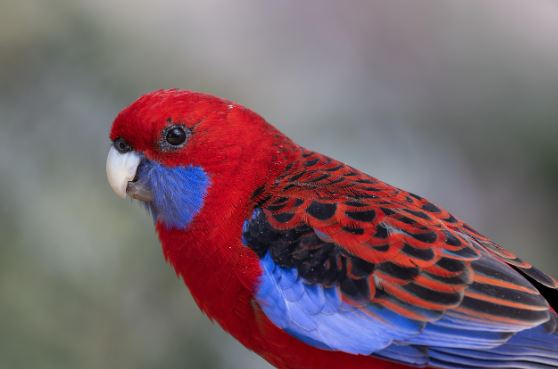
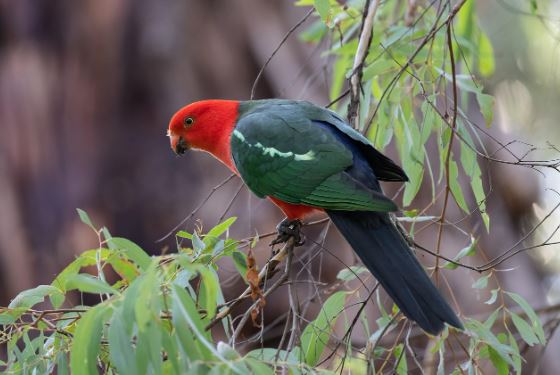
A flash of green and red would streak past. “Rainbow lorikeet,” he’d state, not looking up from his saw. “Juvenile. See the duller beak? Bit clumsy on the landing, too.” A moment later, a chorus of screeches erupted from a flowering gum. “That’s a mob feeding. Listen to that row. Like a playground fight in a jewellery shop.” He paused, wiping his brow, and pointed to a neat, round hole high in a trunk. “Not a lorikeet. But see that? That’s where they nest, the little musk lorikeets. Different tribe altogether. Quieter. More… refined.” He said the last word with a grin, as if attributing social class to parrots.
For twenty minutes, the heritage home faded into a backdrop. Mick’s running narration was a vibrant, real-time overlay. He spoke of their mating rituals (“they’re serial monogamists, you know, very loyal”), their territorial squabbles over nectar sources (“fierce little capitalists”), and the sheer, joyful energy they brought. “People in these big places,” he said, gesturing vaguely with a lopper at the sandstone villa, “they worry about the original door handles and the cornices. And that’s fine, it’s history. But this,” he said, pointing now to a pair of lorikeets preening each other on a power line, “this is alive. This is the best show in town, every single day. And it’s free.”
It was the most profound perspective shift of the day. We had come to listen to the whispers of the past, to admire the frozen ambition in stone and plaster. And we had found it. But Mick, the accidental philosopher with sawdust in his hair, was listening to a different frequency entirely. He heard the raucous, living present—the shrieking, squabbling, iridescent life that danced in the trees around the heritage, utterly indifferent to its historical value.
Walking back to the car, the silent, dignified homes on the street seemed different. They were no longer just museums of human endeavour. They were also, simply, part of the habitat. Their tall chimneys were perches, their ornate gutters collected water for birds to drink, their ancient trees provided food and shelter. Mick hadn’t just been talking about lorikeets; he had been reminding us that history isn’t a sealed box. It’s a stage, and the play is still running, more colourful and noisy than ever. The true heritage, perhaps, isn’t just in the preservation of the house, but in the vibrant, shrieking life it continues to host under its eaves.